OAK ISLAND AND SLACK TIDE
Sassy Class Analytics, LLC | Tuesday, 13 October 2026 | Daily Signal Package
Deterrence After the First Strike
The first threshold was crossed this window. Four remain open, and each of the five events below sits at one of them.
Analytical architecture, research, and artwork by Farrah Ferris. Station-verified analytical package. Cover artwork: a chokepoint rendered as layered signal data. Sassy Class Analytics.
Section 1
The Thesis: Failed to Prevent What?
The habit is familiar. An attack lands, and within hours the verdict is pronounced: deterrence has failed. The verdict feels decisive because the event was visible. It is also the wrong verdict, or rather, it is a verdict issued before the question is stated correctly. The sharper question is not whether deterrence failed. It is: failed to prevent what?
That question matters because deterrence is not one promise. It is three promises, and they are made at three different thresholds.
| Threshold | What it governs | Status in this window |
|---|---|---|
| 1. The opening strike | Preventing the attack that starts or renews the fight. | Crossed. The window opens after it. |
| 2. The expansion of the war | Keeping the conflict capped: target sets, theaters, participants. | Open and under live test on at least two of the five events. |
| 3. Gain hardening into advantage | Preventing a limited military gain from becoming a permanent strategic fact. | Open. Nothing observed is settled. |
Separated this way, the picture changes. A state can fail to stop an attack and still succeed in capping the war. A state can lose ground without letting the loss become a settled political fact. Crossing the first threshold does not retire the other two. It relocates the argument to them.
This is not a rhetorical rescue. It is a change in what the word deterrence is doing. Before a conflict, deterrence works by threat: it holds a cost in front of a decision. Once conflict begins, the threat has already been called, at least in part. What remains is not disappearance but a change of function. Deterrence stops preventing the opening move and starts constraining the second and third. The live question is therefore never simply whether deterrence failed. The live question is what it must prevent next.
The station extends the argument one step further, and the extension is labeled as the station’s own analytical extension, not as a settled finding. Deterrence is a relationship, not an inventory. It is commonly treated as a stockpile question: count the capabilities, add the readiness rates, sum the posture. But a deterrent only carries load if a whole chain holds, and the chain has five links. Capability: the means must exist. Availability: the means must be usable when the moment arrives, which is a different product from preparation. Visibility: the adversary must be able to see enough of the capability to price it into the decision. Belief: the adversary must believe the threat will be executed. And the size of the threatened loss: the cost must exceed what the adversary stands to gain.
The structural point is this: a broken link does not weaken the chain. It stops the chain carrying load altogether. A fleet that exists but cannot sail fails at availability. A force that sails but is not seen fails at visibility. A threat that is seen but not believed fails at belief, and belief is the cheapest link to break and the most expensive to restore.
One failure mode deserves naming, because it is the one a communicator can cause without meaning to. A state builds an image of strength for external consumption, and over time an internal audience, including its own leadership, begins to believe the image. The picture built to shape an adversary’s estimate becomes the home audience’s picture of reality. When that happens, preparation and usable preparation have quietly diverged, and no one has been told. The failure to prevent the next threshold is then discovered at the moment it is needed, not before.
Nothing in this section is a prediction about any country or any war. It is an argument about how deterrence behaves as a structure. The five events in the next section are what give the argument something to sit against. Each of them is an instance of the same shape: a first threshold already crossed, and a second one still open.
Section 2
The Five Events of the Window
The events below are the five developments of the reporting window. Each is presented with its developments, an analysis paragraph, and a threshold reading, and each closes with a watch block: the observable that will show whether the next threshold is being crossed. Each event carries its source line, and the full source list sits in the appendix.
Event 01. A widening rift over Russian diesel
Developments
- Pressure has built for new Ukrainian leadership, alongside criticism of strikes on Russian refineries.
- A signal of readiness to stop refinery strikes has been floated, conditional on a halt to strikes against Ukraine’s energy infrastructure.
- The UK and EU have reaffirmed support for Kyiv and pledged tighter sanctions on Moscow.
Analysis
The dispute is no longer about whether to end the war. It is about who sets its objectives and where the limits on the use of force sit. One capital’s focus sits on fuel prices and domestic politics; the other’s sits on refinery strikes as a means of degrading war capacity. The realistic risk named here is not an automatic breakdown of the coalition but divergence inside it, which is slower and harder to see.
Threshold reading: the first threshold was crossed long ago in this war. What is being contested now is the second, whether the war stays capped at its current scope, and the argument over it has moved inside the supporting coalition.
What to watch
- Whether statements become conditions attached to aid or intelligence support.
- Any reciprocity arrangement on energy infrastructure strikes.
- Actual volumes of Russian diesel reaching markets.
- European offsets to U.S. pressure.
Source: Reuters, 10 to 11 October 2026 (appendix line 1).
Event 02. Naval blockade enforcement intensifies
Developments
- U.S. Central Command reported disabling a Panama-flagged commercial vessel in the Gulf of Oman after it attempted to violate the blockade.
- Separately, UKMTO reported a ship struck by a projectile while transiting the strait, with a fire on board.
- The attacker in the second incident has not been independently confirmed, and the station leaves it unconfirmed.
Analysis
Enforcement pressure and commercial shipping risk are separate pressures that reinforce each other. Enforcement actions against blockade violators and attacks on transiting commerce produce the same market effect even though they differ in intent: planning gets harder, insurance gets more expensive, and the margin for routine operations narrows. A strait does not need to be closed to function as if it were.
Threshold reading: this is the second threshold under live test. Enforcement incidents and unattributed strikes together keep the risk premium in place without requiring either side to escalate formally.
What to watch
- Alert specifics on location, damage and crew status.
- Transit counts over the coming days.
- Insurance premium movements and carrier decisions.
- Any broadening of rules of engagement to more commercial vessels.
Source: U.S. CENTCOM statement; UKMTO report via Reuters, 11 October 2026 (appendix lines 2 and 3).
Event 03. An attack on a civilian aviation hub in Riyadh
Developments
- The Saudi General Authority of Civil Aviation reported twelve dead and 309 injured from the October 10 attack, with critical cases among the injured.
- Operations at the affected hub were temporarily suspended to assess damage and verify facility safety.
- Attribution came from a party to the conflict, not from an independent finding.
Analysis
An attack on civilian aviation infrastructure carries two costs that outlast the incident itself. The economic cost runs through suspension, rerouting and cancelled capacity. The defensive cost runs through reallocation: assets and attention drawn toward protecting a category of target that was previously assumed safe. The technical cause and method remain under investigation, and the record here should not be read as evidence of a systemic collapse of air defenses.
Threshold reading: a strike on civil aviation is an expansion of the target set, which is precisely what the second threshold governs. The attribution question sits below the confirmed line and is labeled as such.
What to watch
- Conditions for the resumption of operations.
- The investigation’s findings on the weapon used and its flight path.
- Changes to air defense posture and flight schedules.
- Airline cancellation, diversion and routing decisions.
Source: Saudi General Authority of Civil Aviation via Saudi Press Agency, 11 October 2026 (appendix line 4).
Event 04. A mediation channel through Moscow
Developments
- A Kremlin statement said a settlement view was conveyed to Washington in coordination with Tehran.
- A public statement from Tehran held that negotiations will not succeed under pressure and threats.
- No accepted deal exists. Nothing has been signed.
Analysis
A new communication channel is not a settlement. It is an architecture, and its value depends entirely on what flows through it. The same structure can organize sequencing and verification, or it can absorb pressure by prolonging talks without producing commitments. Both outcomes are consistent with everything observed so far, which is why the watch items matter more than the announcement.
Threshold reading: a channel like this either structures de-escalation or becomes its substitute. Which of the two it becomes is a third-threshold question: whether a frozen diplomatic process hardens into a permanent strategic arrangement.
What to watch
- Whether specific elements of the proposal are published.
- The response to the channel, and the role of other mediators.
- The sequencing of commitments and verification steps.
- Any measurable de-escalation alongside the talks.
Source: Kremlin statement via Al Jazeera, 11 October 2026 (appendix line 5).
Event 05. Ground fighting near Bab el-Mandeb
Developments
- Government-aligned forces reported repelling an attack near an airfield on the strait’s approach.
- The coalition intensified strikes on a missile network.
- Battlefield losses are not independently verified.
Analysis
Tactical struggle on the shore can shape maritime approaches without any confirmed change in territorial control. What matters for shipping is not who holds the ground at a given hour but whether launch capability is being degraded at a sustained rate. Success measured by claimed destruction is fragile; success measured by a sustained decline in attacks is real.
Threshold reading: this is the third threshold in miniature. A tactical gain, real or claimed, becomes strategically meaningful only if it hardens into a durable condition. Nothing observed so far supports treating it as durable.
What to watch
- Launch frequency of missiles and drones.
- Verified territorial control and supply routes.
- Actual impact on commercial shipping in the Red Sea.
- Any parallel diplomatic track or drift toward attrition.
Source: Al Jazeera, 11 October 2026 (appendix line 6).
The window in one line
The window shows growing interconnection between energy, maritime security, military escalation and alliance politics. Statements are signals. The test lies in verifiable actions on the ground, at sea and in markets.
The five events at a glance
| Event | Watch lines | Threshold state |
|---|---|---|
| 01. A widening rift over Russian diesel | • Whether statements become conditions attached to aid or intelligence support.• Any reciprocity arrangement on energy infrastructure strikes.• Actual volumes of Russian diesel reaching markets.• European offsets to U.S. pressure. | The first threshold was crossed long ago in this war. What is being contested now is the second, whether the war stays capped at its current scope, and the argument over it has moved inside the supporting coalition. |
| 02. Naval blockade enforcement intensifies | • Alert specifics on location, damage and crew status.• Transit counts over the coming days.• Insurance premium movements and carrier decisions.• Any broadening of rules of engagement to more commercial vessels. | This is the second threshold under live test. Enforcement incidents and unattributed strikes together keep the risk premium in place without requiring either side to escalate formally. |
| 03. An attack on a civilian aviation hub in Riyadh | • Conditions for the resumption of operations.• The investigation’s findings on the weapon used and its flight path.• Changes to air defense posture and flight schedules.• Airline cancellation, diversion and routing decisions. | A strike on civil aviation is an expansion of the target set, which is precisely what the second threshold governs. The attribution question sits below the confirmed line and is labeled as such. |
| 04. A mediation channel through Moscow | • Whether specific elements of the proposal are published.• The response to the channel, and the role of other mediators.• The sequencing of commitments and verification steps.• Any measurable de-escalation alongside the talks. | A channel like this either structures de-escalation or becomes its substitute. Which of the two it becomes is a third-threshold question: whether a frozen diplomatic process hardens into a permanent strategic arrangement. |
| 05. Ground fighting near Bab el-Mandeb | • Launch frequency of missiles and drones.• Verified territorial control and supply routes.• Actual impact on commercial shipping in the Red Sea.• Any parallel diplomatic track or drift toward attrition. | This is the third threshold in miniature. A tactical gain, real or claimed, becomes strategically meaningful only if it hardens into a durable condition. Nothing observed so far supports treating it as durable. |
Section 3
The Station’s Verified Layer
Everything above this line is reporting plus analysis. This section is the deck’s spine of trust: it separates what the station has independently confirmed from primary sources from what remains unverified. Confirmed items are the station’s own dated reads of primary sources. Unverified items are stated as unverified, without softening.
Confirmed by the station
| Station primary-source read | What the station confirmed |
|---|---|
| OFAC, 9 October (station read, dated) | The International Criminal Court itself designated under EO 14203; four related general licenses issued the same day; one Burma-related individual removed; a $175,015 settlement for apparent drug-trafficking sanctions and reporting violations. |
| OFAC, 8 October (station read, dated) | The Iran shadow fleet wave: multiple individuals, entities and vessels added; two vessels removed; a wind-down general license issued for the named marine services company; an amended Russia-related general license issued. |
| Three-axis pressure (station read) | Sanctions pressure running on three axes at once: Iran’s industrial and maritime base, Hamas financing, and Russian energy logistics. |
Unverified, labeled as such
The following items remain unverified. They are reported in the window but the station cannot stand behind them, and none of them may be treated as fact downstream.
- The identity of the attacker in the transit incident. No independent confirmation exists in the window.
- The Riyadh airport attribution, which comes from a party to the conflict rather than an independent investigation.
- The battlefield loss claims near Bab el-Mandeb.
- Two items that appear only inside the monitored material and have not been checked against a primary U.S. source: a Russia-related diesel general license dated 9 October, and a reported call between heads of state. These require primary-source confirmation before any reuse.
The confirmed and unverified split at a glance
| Confirmed by the station | Unverified, labeled as such |
|---|---|
| No new OFAC action since 9 October (station reads through 12 October). | Identity of the attacker in the transit incident. |
| The 9 October ICC designation under EO 14203 with four general licenses, one Burma removal, and a $175,015 settlement. | The Riyadh airport attribution, which comes from a party to the conflict. |
| The 8 October Iran shadow fleet wave with additions, removals and two general licenses. | Battlefield loss claims near Bab el-Mandeb. |
| Three-axis pressure: Iran industrial and maritime, Hamas financing, Russian energy logistics. | A Russia-related diesel general license dated 9 October, and a reported call between heads of state: both unchecked against a primary U.S. source, and both require confirmation before reuse. |
Section 4
The Maritime Picture
The kinetic picture in the strait escalated inside the window. Six commercial vessels were struck in and near the strait in a single day around 11 October: five tankers and one container ship. The reported methods were projectile, mine and unmanned aerial vehicle. A claim of responsibility was made publicly. Casualty reporting from the surrounding days stands at two crew reported missing from one vessel struck by drone near a Gulf port.
A declaration followed that the waterway remains closed until military pressure ends. The station treats this as a reported declaration, not a verified physical closure. The distinction matters: the waterway is not physically blocked, but the declaration and the strike cadence together produce the effect of closure on commercial decision-making.
Transit volume remains at a fraction of baseline. The station’s verified figure is a seven-day average of approximately 10.0 commercial crossings per day against a pre-crisis baseline of 84.8 per day. Independent tracking shows higher counts, and the difference is explained largely by vessels running without transponders. War-risk insurance and freight costs remain at record levels.
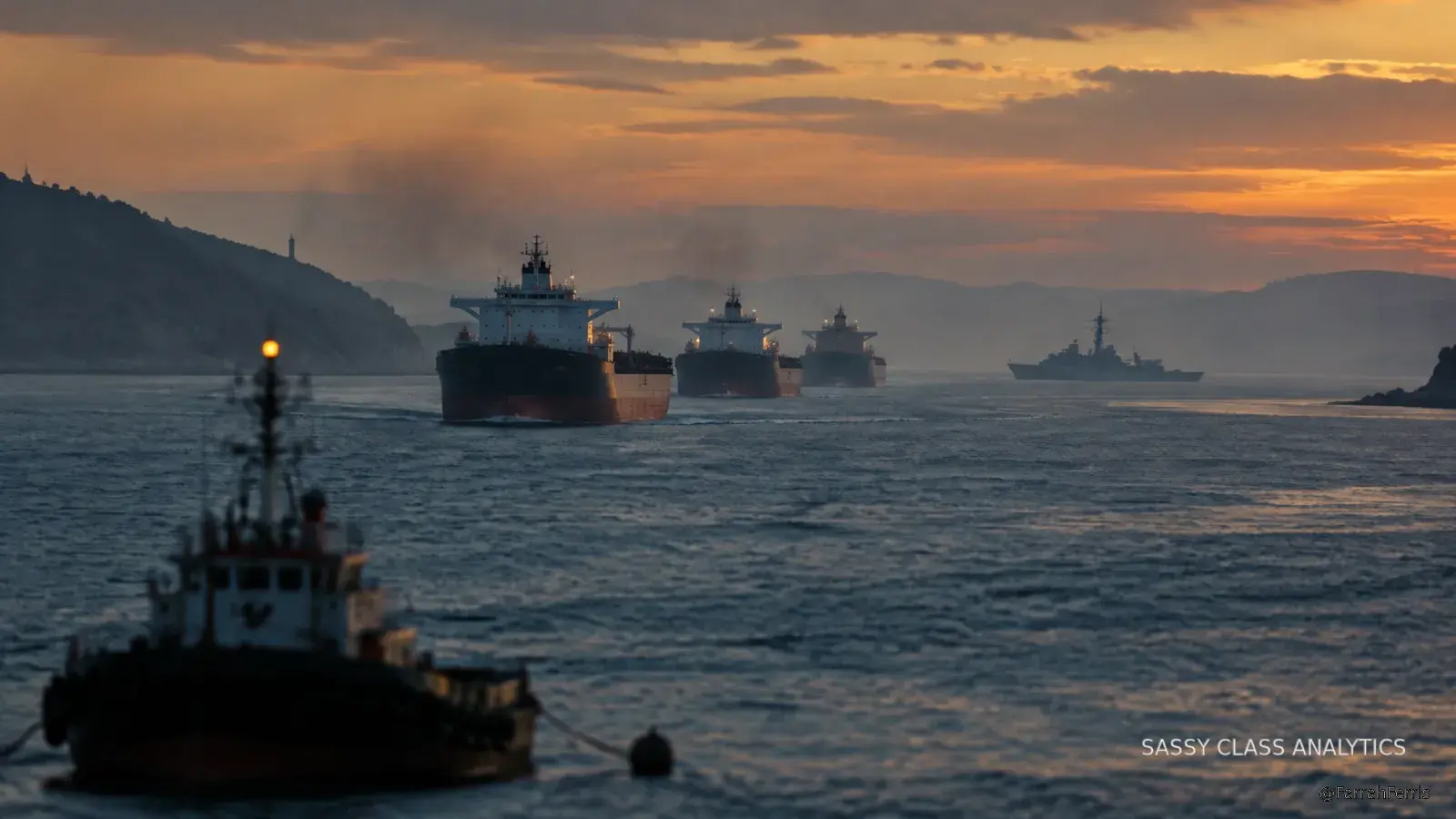
Inference, labeled as such: the gap between visible transits and actual cargo movement is best explained by routing adaptations and dark transits rather than restored safety. The recovery in throughput, where it exists, is a workaround, not a de-escalation.
Section 5
Energy and Markets
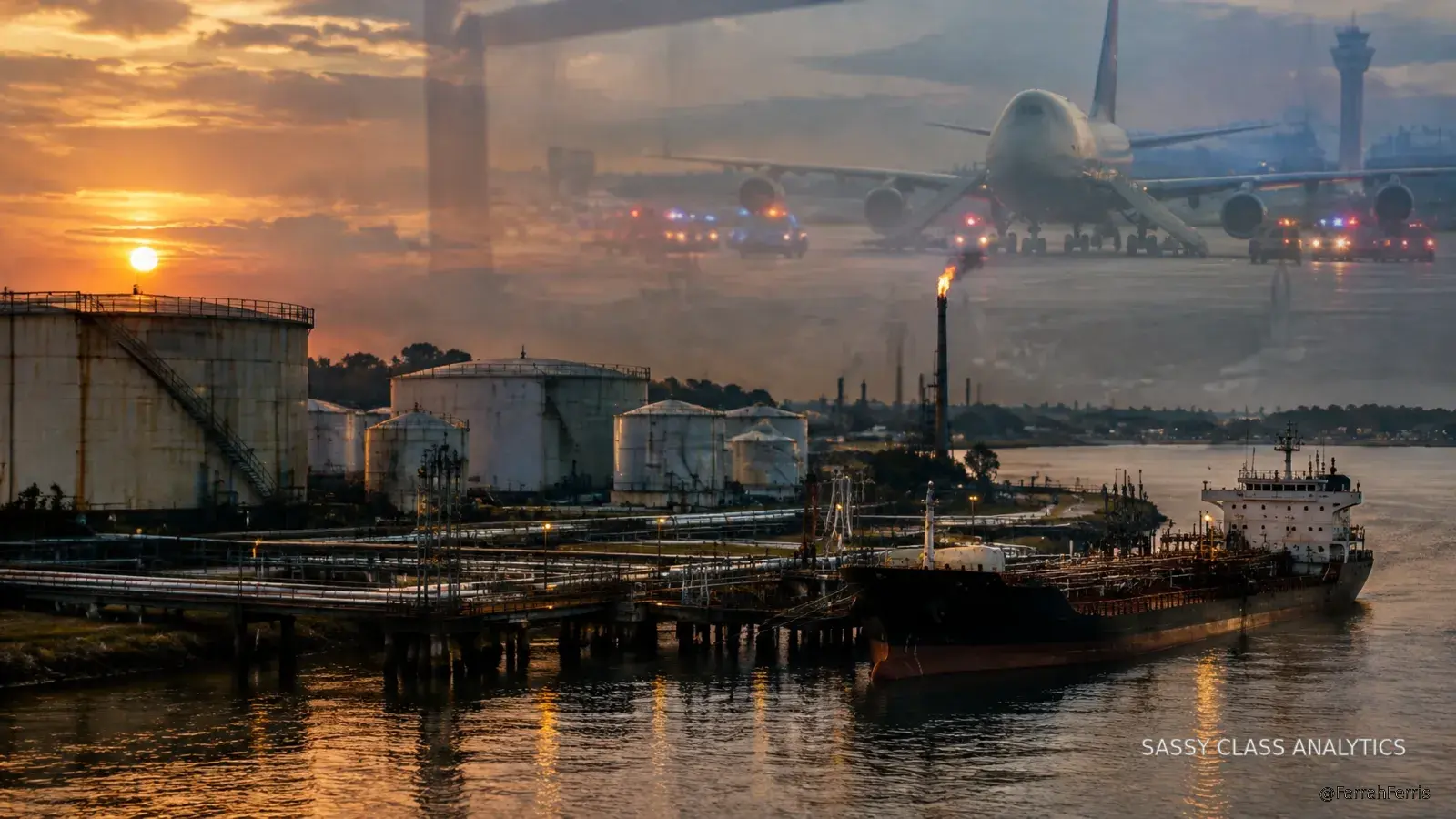
Brent traded in the $105 to $106 range across the session, against a prior settlement near $106.65, with WTI near $91. These figures are reported market data, not a forecast, and they carry the usual reporting caveats across contracts and desks.
The read on the price is inference, labeled as such: the market is holding two pressures at once. Supply-side headlines and reserve releases push prices down, while a persistent maritime risk premium pushes them up. The net effect is a price that holds its range against a backdrop where either pressure could reassert itself quickly. The premium is being defended by the threat environment, not by any loss of physical supply that the station can confirm.
Section 6
The Regulatory Calendar
The stablecoin implementation calendar carries two live comment dockets against a statutory backstop, and it is the quietest item in this deck and the one with the longest fuse.
| Docket | Window closes | Status |
|---|---|---|
| Treasury: stablecoin issuance, offer and sale | 19 October 2026 | Open. Comments due. One implementing rule in force; all others proposed. |
| Federal Reserve: implementing responsibilities under the GENIUS Act | 30 November 2026 | Open. Proposals published 29 September 2026. |
| Statutory backstop | 18 January 2027 | Operative. No statutory penalty attached to the earlier missed deadline. |
One implementing rule is in force: the Treasury interim final rule on state certification procedures. All other implementing regulations remain at proposed stage. No statutory penalty attaches to the earlier missed deadline. The consequence is procedural rather than punitive: the statutory backstop of 18 January 2027 remains operative, and the two open windows are the last structured opportunities to shape the record before it.
Section 7
Mechanisms Worth Naming
Two mechanisms in the window are worth naming precisely because they are not events. They are patterns of behavior around events.
The first is reuse across surfaces. The same deterrence line and the same threshold argument appeared on multiple surfaces within the same window, in the same wording. The operational read, labeled as inference: repetition across surfaces is how a framing becomes vocabulary, and vocabulary travels further than argument. An argument must be accepted to spread. A phrase only needs to be repeated.
The second is the editorial operation. A recurring review that ranks third-party work is a different activity from analysis. It has a different audience, a different incentive structure, and a different kind of reach: it accrues authority by associating with the work it ranks. Kept brief and kept unnamed, the observation stands on its own. An operation of that shape is worth watching for what it ranks and why, not only for what it publishes.
Section 8
What This Deck Cannot Tell You
An honest deck states what it cannot do.
It cannot tell you which threshold breaks next. Four remain open after the first was crossed, and the watch items in Section 2 are the closest this material comes to a forecast. They are observables, not predictions.
It carries a framing whose strength is also its exposure. A framework that keeps its distance from conclusions is hard to falsify and easy to keep producing. That is true of the threshold argument in this deck as much as of any other, and the reader should hold it with that caveat attached.
And the candor is the point. A deck that told you what will happen next would be selling certainty this material does not contain. The station’s standard is the confirmed line, the labeled inference, and the willingness to stop where the evidence stops. That standard is a feature, not a weakness.
Appendix
Appendix: Sources
Every factual element above traces to a numbered line here. Where the source is the station’s own read of a primary source, the line says exactly that. Types: confirmed primary source, station primary-source read, reported market data, inference.
- 1. CONFIRMED PRIMARY SOURCE. Reuters, 10 to 11 October 2026: U.S. calls for new Ukrainian leadership and criticism of strikes on Russian refineries; a signaled readiness to halt refinery strikes if strikes on Ukraine’s energy infrastructure stop; UK and EU reaffirm support and pledge tighter sanctions.
- 2. CONFIRMED PRIMARY SOURCE. U.S. CENTCOM statement, 10 to 11 October 2026: a Panama-flagged commercial vessel disabled in the Gulf of Oman after attempting to violate the blockade.
- 3. CONFIRMED PRIMARY SOURCE. UKMTO report via Reuters, 11 October 2026: a ship struck by a projectile while transiting the strait, fire on board; attacker not independently confirmed.
- 4. CONFIRMED PRIMARY SOURCE. Saudi General Authority of Civil Aviation via Saudi Press Agency, 11 October 2026: twelve dead and 309 injured in the October 10 attack on a civilian aviation hub in Riyadh; operations temporarily suspended; attribution by a party to the conflict.
- 5. CONFIRMED PRIMARY SOURCE. Kremlin statement via Al Jazeera, 11 October 2026: a settlement view conveyed to Washington in coordination with Tehran; a public statement that negotiations will not succeed under pressure and threats; no accepted deal.
- 6. CONFIRMED PRIMARY SOURCE. Al Jazeera, 11 October 2026: government-aligned forces report a repelled attack near an airfield on the Bab el-Mandeb approach; coalition strikes intensified on a missile network; battlefield losses not independently verified.
- 7. STATION PRIMARY-SOURCE READ. OFAC Recent Actions, 9 October 2026 (station read, dated): the International Criminal Court itself designated under EO 14203 with four related general licenses issued the same day; one Burma-related individual removed; a settlement of $175,015 for apparent drug-trafficking sanctions and reporting violations. No new OFAC action posted since 9 October as of the station’s reads through 12 October.
- 8. STATION PRIMARY-SOURCE READ. OFAC Recent Actions, 8 October 2026 (station read, dated): multiple individuals, entities and vessels added in the Iran shadow fleet wave; two vessels removed; a wind-down general license issued for a named marine services company; an amended Russia-related general license issued.
- 9. STATION PRIMARY-SOURCE READ. OFAC Recent Actions, 1 to 2 October 2026 (station read, dated): a transnational criminal organization designation, Iran-related designations and updates, a sectoral determination, and a Hamas financing network designation. These anchor the three-axis read below.
- 10. STATION PRIMARY-SOURCE READ. SDN list state, 10 to 12 October 2026 (station read, dated): no new designations in the window; sanctions pressure running on three axes at once, Iran’s industrial and maritime base, Hamas financing, and Russian energy logistics.
- 11. STATION PRIMARY-SOURCE READ. Station signal log, 10 to 12 October 2026 (station read, dated): at least six commercial vessels struck in and near the strait in a single day around 11 October, five tankers and one container ship, by projectile, mine and unmanned aerial vehicle, with a public claim of responsibility; two crew reported missing from a vessel struck by drone near a Gulf port on 9 October; a reported declaration that the waterway remains closed until military pressure ends; seven-day transit average approximately 10.0 crossings per day against a pre-crisis baseline of 84.8 per day, with independent tracking showing higher counts including vessels running without transponders; war-risk insurance and freight costs at records.
- 12. CONFIRMED PRIMARY SOURCE. Federal Register: Treasury window on stablecoin issuance, offer and sale, docket TREAS-DO-2026-0496, comment window closing 19 October 2026. Federal Reserve proposals published 29 September 2026, comment window closing 30 November 2026. Statutory backstop 18 January 2027. One implementing rule in force (Treasury interim final rule on state certification procedures); all others proposed; no statutory penalty attached to the earlier missed deadline.
- 13. REPORTED MARKET DATA. Oil price reporting, 12 to 13 October 2026: Brent in the $105.00 to $106.13 range across the session against a prior settlement near $106.65; WTI near $91. Reported market data, not a forecast.
- 14. INFERENCE. The two-sided pressure read in Section 5: supply-side headlines and reserve releases pushing prices down against a persistent maritime risk premium pushing up. Labeled inference in the body text.
- 15. INFERENCE. The reuse-across-surfaces read in Section 7: repetition of one framing across multiple surfaces in the same window is how a framing becomes vocabulary. Labeled inference in the body text.
Status of the split table: the confirmed column draws on appendix lines 7 to 11. The unverified column draws on Section 3 and on lines 3 and 6 for the attacker identity and the battlefield losses. The Riyadh attribution is line 4; the two unchecked items are recorded in the source material and require primary-source confirmation before reuse.
Standing Notice of Reservation of Rights
- No reproduction, derivative work, reconstruction, renaming or rebranding of the architecture, structure, methodology or coined frameworks contained in this deck is permitted without prior written permission from Sassy Class Analytics, LLC. No license is granted, express or implied.
- Proprietary framework tag: The Threshold Model of Deterrence, the Capability, Availability, Visibility, Belief and Loss chain, and the vocabulary-formation read are proprietary analytical frameworks of Sassy Class Analytics, LLC, tagged as such. No license granted, express or implied.
- © 2026 Sassy Class Analytics, LLC. All rights reserved. Analytical architecture, research, and artwork by Farrah Ferris.
- #Hormuz #Maritime #Deterrence #SITREP